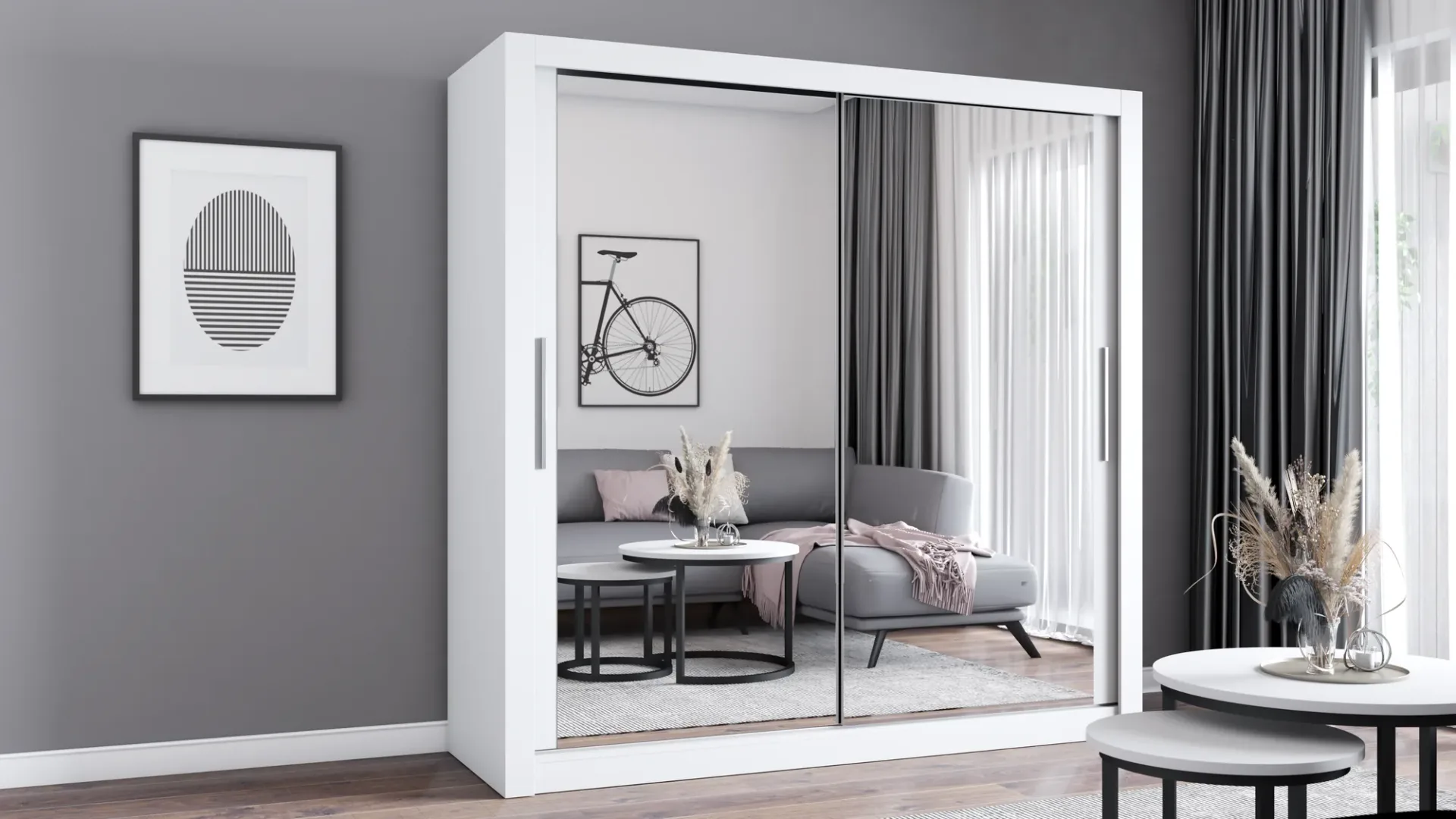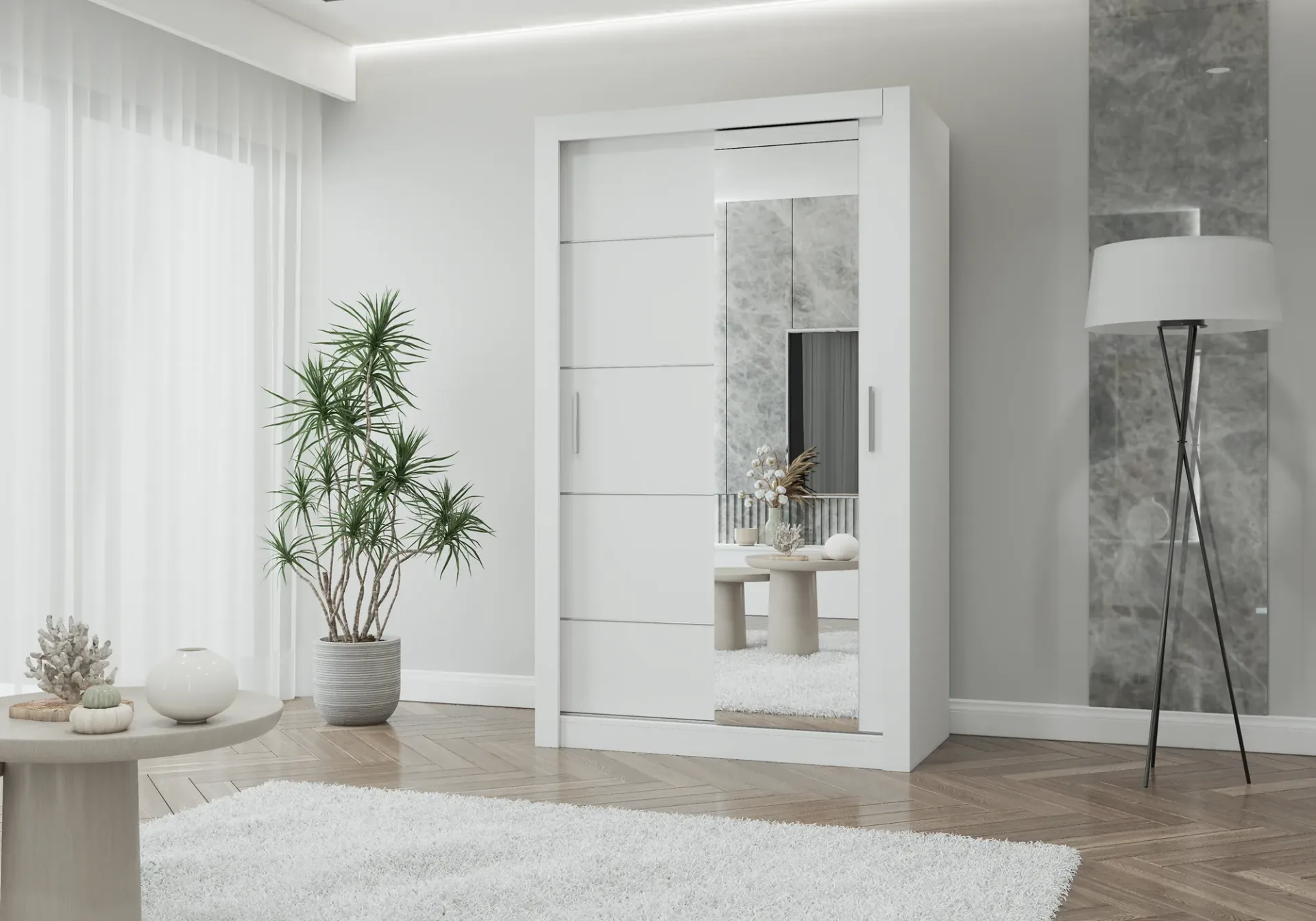

Comparison · Wardrobes
Sliding vs hinged wardrobes: which suits your bedroom?
By The Elmivo team · · 2 min read
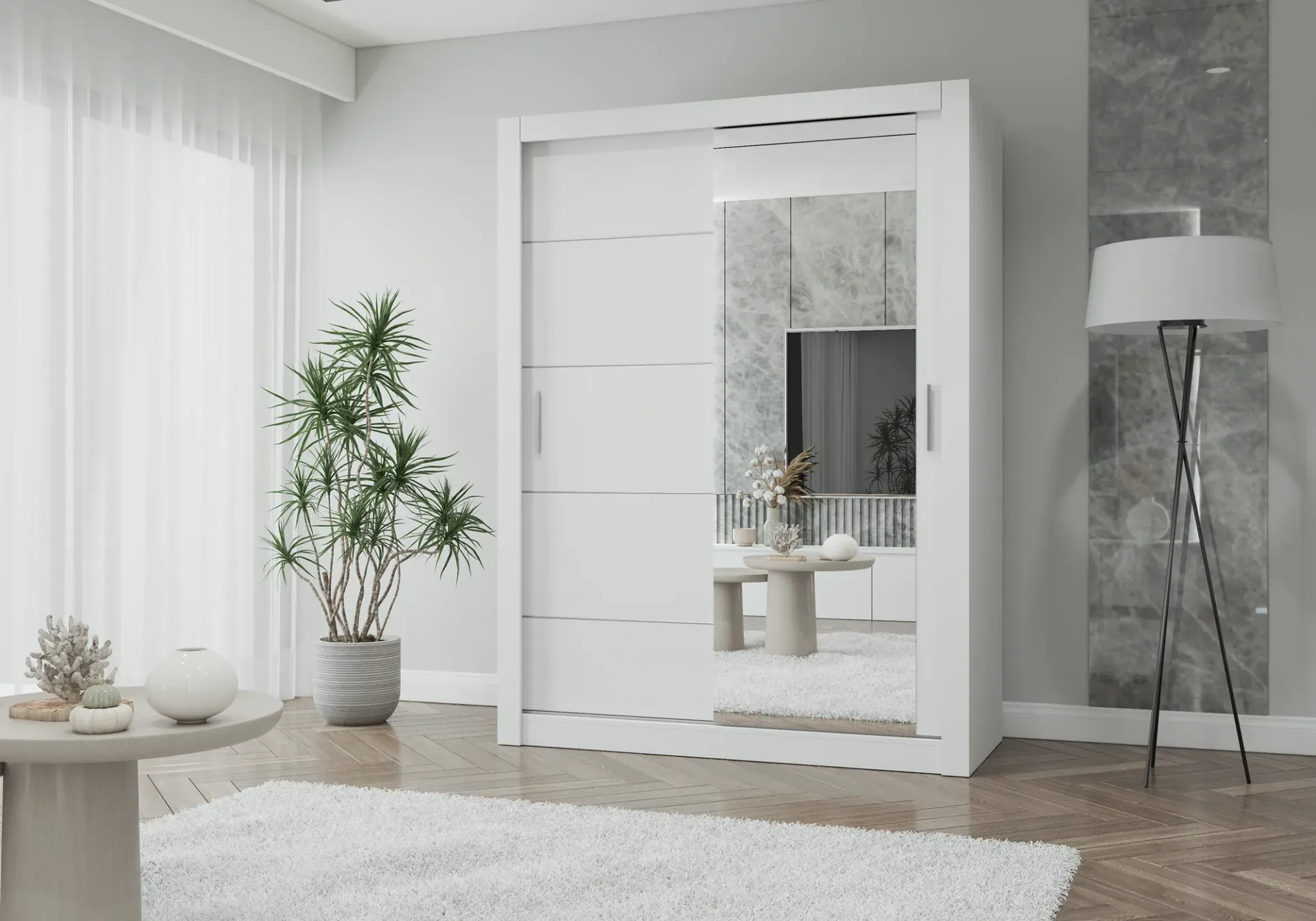
In short
Choose sliding doors when space in front of the wardrobe is tight or you want a full-length mirror; they need no room to open. Choose hinged doors when you have clear floor in front and want to see the whole inside at once.
In this guide
Both kinds hold the same clothes. The difference is how the doors move, and that decides how much of your bedroom floor the wardrobe really uses. We sell sliding wardrobes only, so we have tried to be fair about where a hinged one is the better choice.
The difference in one table
| Sliding doors | Hinged doors | |
|---|---|---|
| Space needed in front | None to open | The width of a door, usually 40 to 60 cm, kept clear |
| What you see when open | One side at a time | The whole inside at once |
| Mirror | A full-height mirror on a whole door is common | Usually a narrower mirror, or one inside a door |
| Depth | A little deeper, to make room for the tracks (ours are 64 cm) | Often a little shallower |
| Where it works best | Small rooms, beside a bed, narrow rooms | Larger rooms with clear floor in front |
Where sliding doors win
A small or narrow bedroom. A hinged door needs its own width of clear floor to swing through. Between a wardrobe and a bed that is often space you do not have. A sliding door opens fully in a gap you could not open a hinged door in at all.
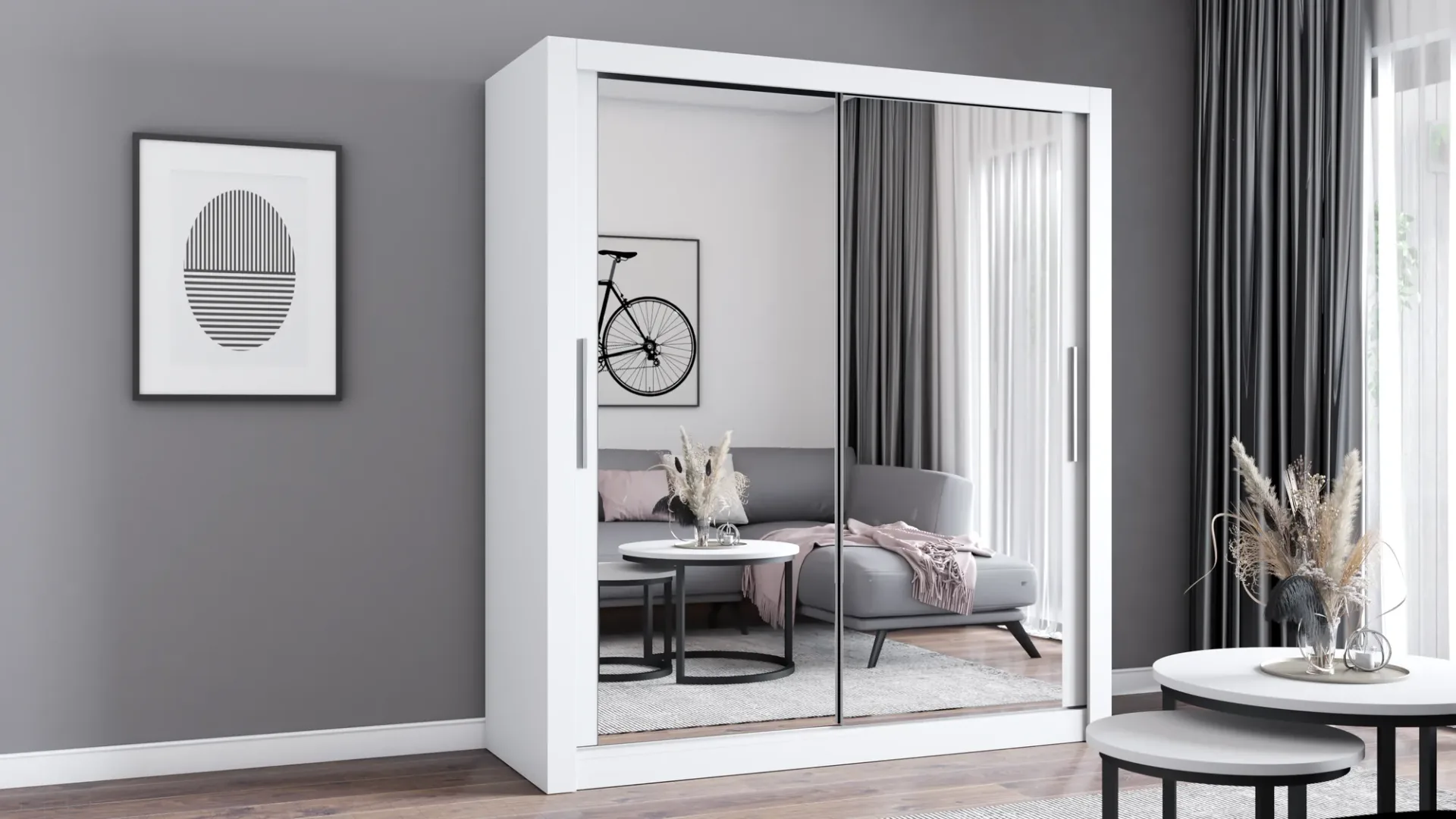
A full-length mirror. A sliding door is one large flat panel, so it can be mirrored from top to bottom. In a small room that both saves a separate mirror and makes the room feel larger.
A wide wardrobe. At 200 cm and more, sliding doors keep a calm, flat front. The same width in hinged doors is four or five separate doors.
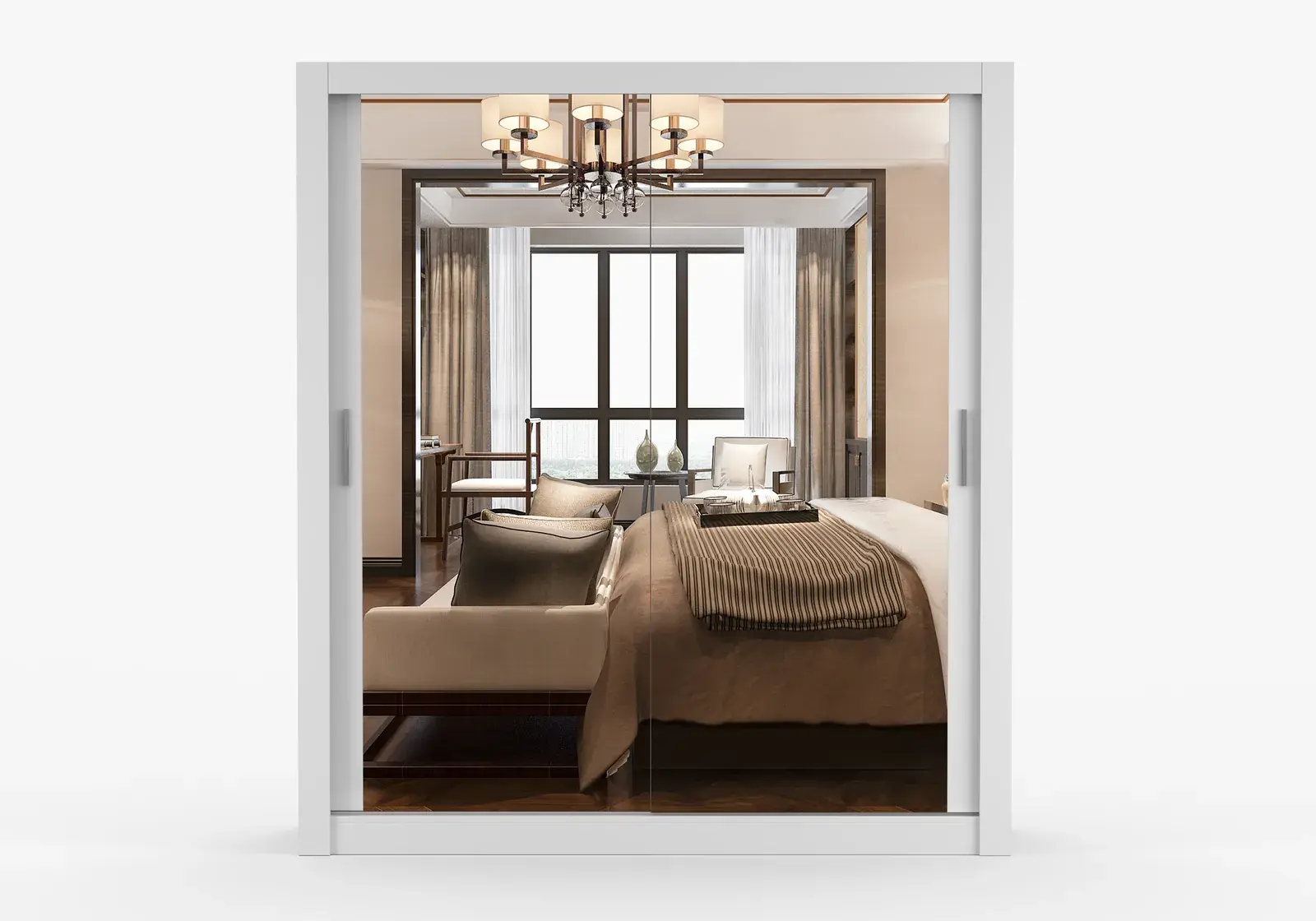
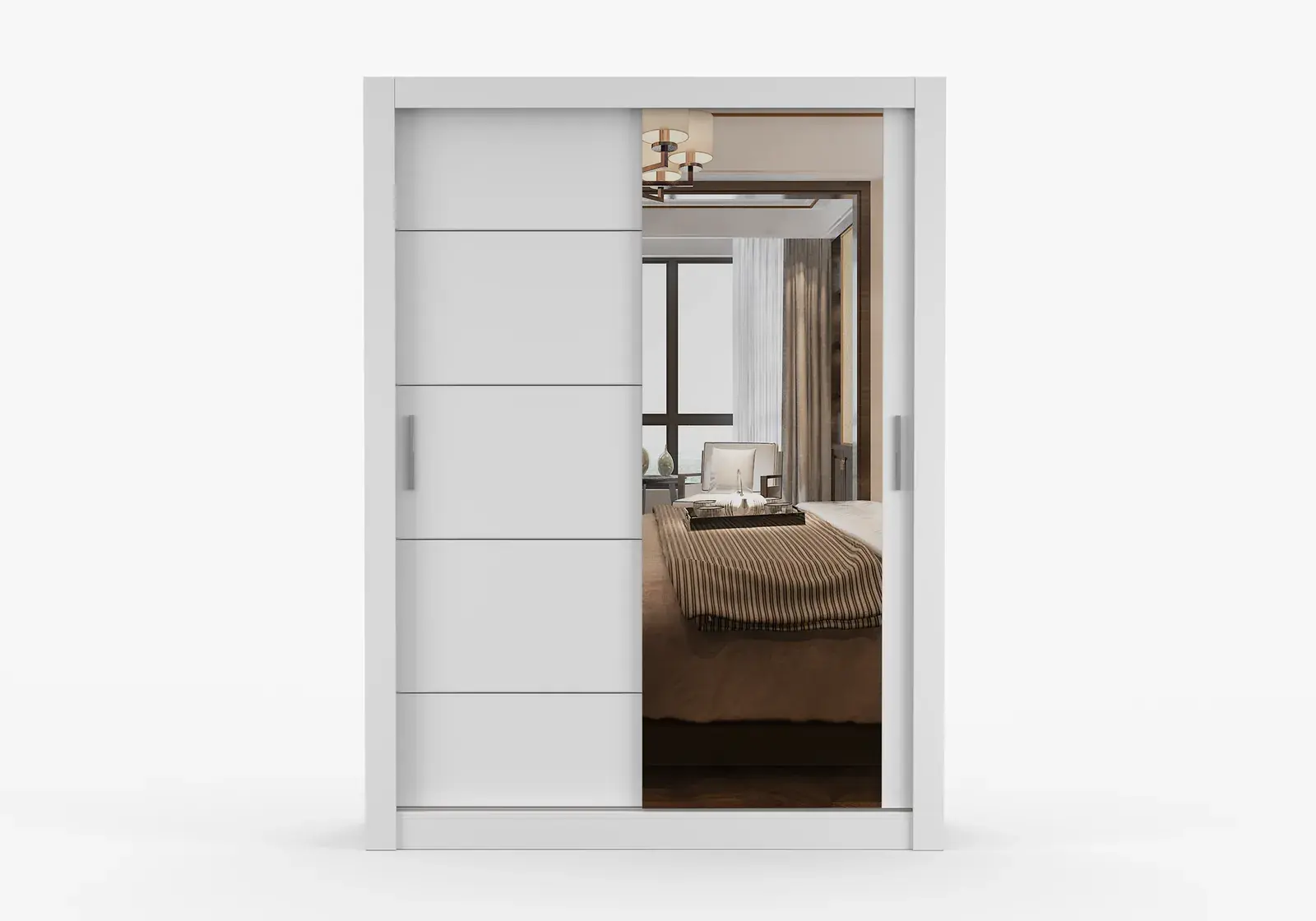
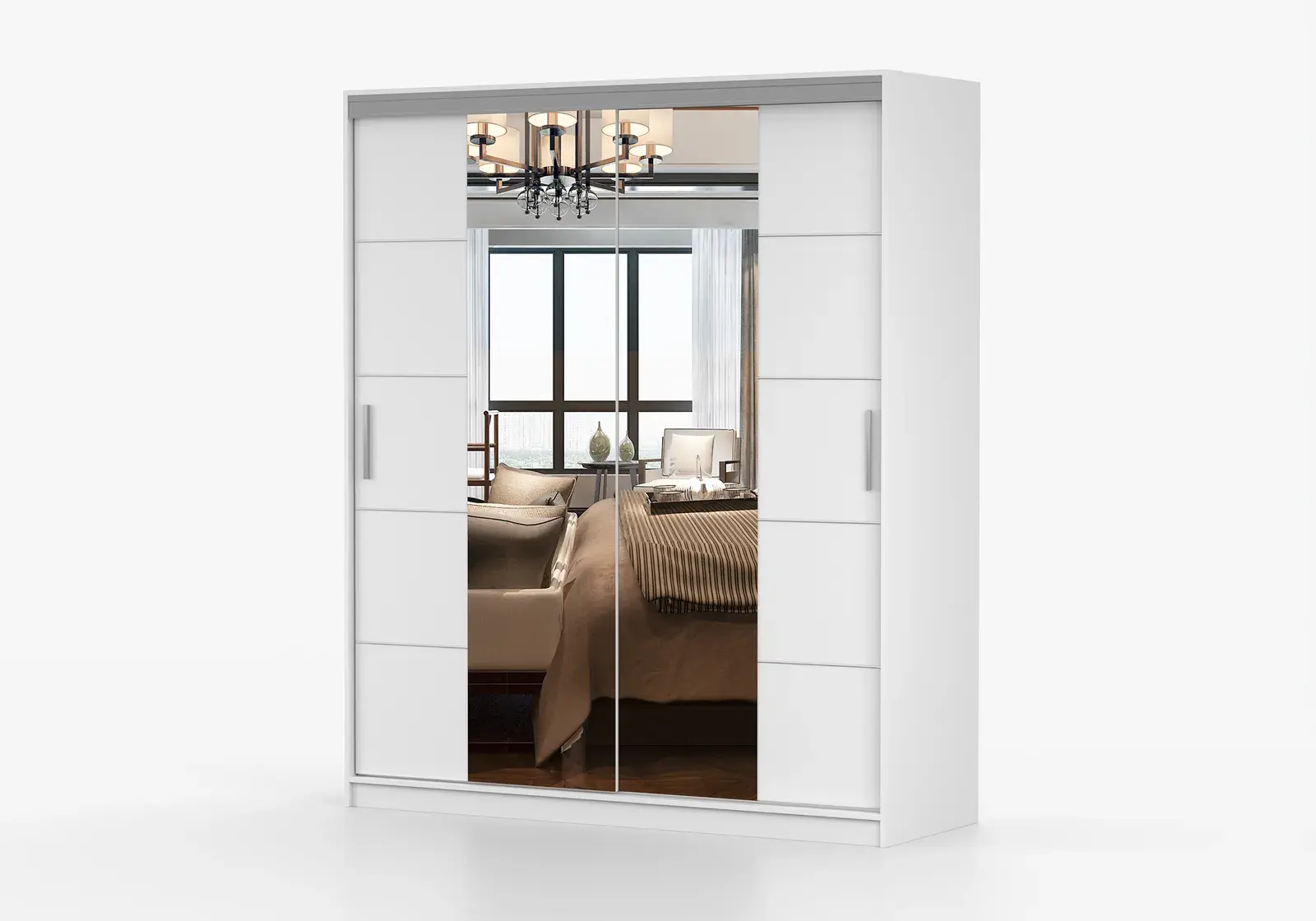
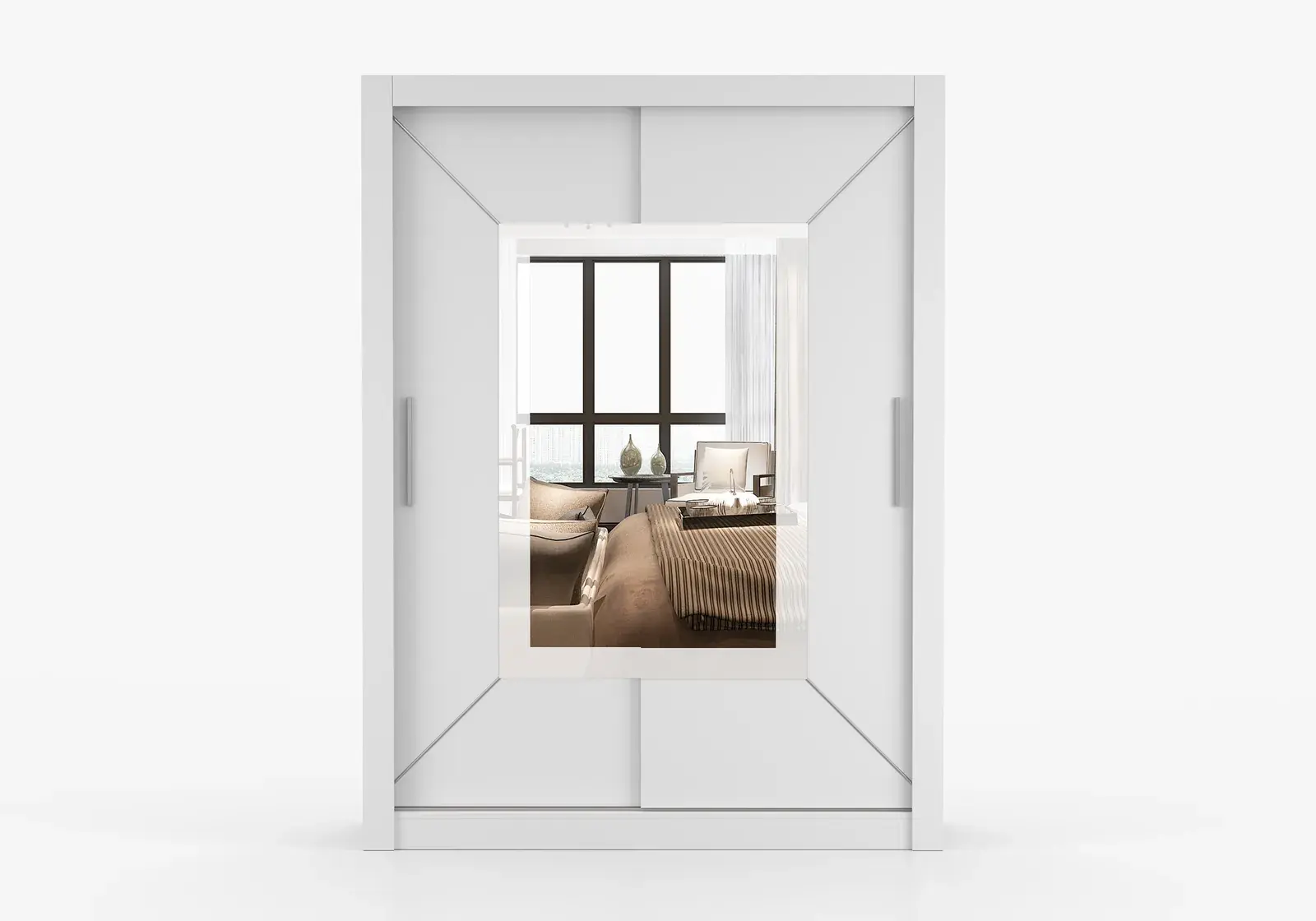
Mumbai 180 cm Sliding Wardrobe
-17%£290
Was: £350
180 cm wide · 4 colours
In stockFree next-day delivery available
Where hinged doors win
Seeing everything at once. With two sliding doors you look at one half of the wardrobe at a time. If you like to stand back and see every shelf and rail together, hinged doors do that better.
Shallow spaces. Sliding doors run on tracks one behind the other, which adds a few centimetres of depth. Where every centimetre of depth counts, a hinged wardrobe can be slimmer.
Fittings on the back of the door. Hooks, tie rails and an inside mirror need a hinged door to hang on.
How to decide in a minute
- Measure the clear floor in front of where the wardrobe will stand.
- If it is less than about 90 cm, sliding doors are the practical choice: a hinged door would open into the bed or the walkway.
- If you have more, choose by habit: sliding for a mirror and a flat front, hinged to see everything at once.
Good to know: our wardrobes are free-standing pieces with their own base, so the doors run in the wardrobe's own track, not on your carpet.
Ready to look? See every sliding wardrobe, or read how to measure for one.
Questions people ask
Are sliding wardrobes better than hinged?
In a small room, usually yes, because the doors need no space in front to open. In a large room it is a matter of taste: hinged doors let you see the whole inside at once.
Do sliding wardrobes hold less?
No. For the same width and height the hanging and shelf space is much the same. Sliding wardrobes are often a little deeper, because the doors run one behind the other.
Can a sliding wardrobe have a mirror?
Yes, and usually a larger one than a hinged wardrobe. On the Mumbai range both doors are mirrored from top to bottom.